
Learning music involves a lot more than mastering an instrument — it’s also a major memory challenge. From recalling note names to memorizing complex pieces, musicians constantly rely on their brains to store and retrieve vast amounts of information. One of the most effective tools they use, often without even realizing it, is the mnemonic device. But why do mnemonics work so well for musicians? To answer that, we need to look at the deep connection between memory, melody, and the way our brains process information.
What Are Mnemonics in Music?
Mnemonics are memory aids — strategies that make information easier to encode, store, and recall. In music, mnemonics come in many forms:
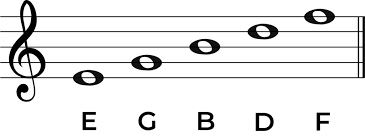
- Acronyms for remembering musical notes (e.g., “Every Good Boy Does Fine” for the lines of the treble clef)
- Phrases for learning key signatures (e.g., “Father Charles Goes Down And Ends Battle” for the order of sharps)
- Rhythmic sayings that help internalize complex rhythms
Sometimes the mnemonic isn’t a verbal phrase at all — it’s a melody or a rhythmic pattern that helps a musician remember what comes next.

Why Mnemonics Work: The Cognitive Science
Mnemonics aren’t just convenient — they’re rooted in how the brain naturally prefers to organize information.
Chunking Information
The brain can only hold a small amount of raw information in working memory at once (around 7 items). Mnemonics help by chunking many pieces of information into a smaller, more manageable unit. Instead of remembering five random note names, you remember one simple phrase.
In music, chunking turns long sequences into memorable, meaningful groups, which makes learning faster and recall easier under pressure.
Associative Learning
Our brains are wired to remember things by association. A meaningless string of notes is hard to retain — but a funny or vivid phrase attached to it sticks. The weirder or more emotional the association, the stronger the memory.
Musical mnemonics often use humour, rhythm, or emotion to create a strong link between the concept and the memory aid.
Multisensory Encoding
Music itself is multisensory: it engages hearing, motor skills, emotion, and often vision (through reading scores or tablature). Mnemonics take advantage of this by embedding information into multiple brain pathways at once. When you sing a mnemonic out loud or tap it out rhythmically, you deepen the memory trace.
This multisensory reinforcement explains why mnemonic-based learning often results in long-term retention, not just short-term memorization.
Emotional Engagement
Songs, rhythms, and catchy phrases often trigger emotional reactions — even small ones. Emotion strengthens memory encoding. A silly rhyme or a playful melody makes learning more enjoyable, which makes the information more memorable.
In short: if it feels good or fun to learn, your brain holds onto it better.
Examples of Mnemonics in Musical Memory
- Treble Clef Lines: E-G-B-D-F → Every Good Boy Does Fine
- Bass Clef Lines: G-B-D-F-A → Good Boys Do Fine Always
- Sharp Order: F-C-G-D-A-E-B → Father Charles Goes Down And Ends Battle
- Flat Order: B-E-A-D-G-C-F → Battle Ends And Down Goes Charles' Father
And in more advanced theory:
- Remembering modes (Ionian, Dorian, Phrygian, etc.) often involves custom mnemonic sentences built around the names.
Even full melodies sometimes function as mnemonics — think about how the ABC song is simply “Twinkle Twinkle Little Star” with new lyrics designed to teach the alphabet.
How Musicians Can Use Mnemonics More Effectively
- Create your own mnemonics: Personal memory devices are often stronger because they have unique meaning to you.
- Use rhythm and melody: Turn information into a short song or chant.
- Make it vivid or silly: Stronger imagery or humour makes the memory more "sticky."
- Review often: Mnemonics are most powerful when refreshed periodically.
Mnemonics are far more than cute learning tricks — they’re powerful memory tools that tap into the way the brain naturally prefers to process information. In music, where memory load can be massive and fast recall is critical, mnemonic devices can mean the difference between struggle and fluency.
By turning information into melody, rhythm, or vivid phrases, musicians don’t just memorize — they internalize, creating lasting memories that can support a lifetime of performance and creativity.
Also Read: How Hozier Channels Yeats, Blake, and Irish Folklore in His Songs
---Silviya.Y