

The time loop is one of sci-fi’s most recognizable tropes. From ‘Groundhog Day’ to ‘Edge of Tomorrow’ to ‘Palm Springs’, we’ve seen characters relive the same day, again and again, until they “fix” something—usually themselves. But when ‘Russian Doll’ premiered on Netflix in 2019, it didn’t just join the time loop genre. It reshaped it.
Co-created by Natasha Lyonne, Amy Poehler, and Leslye Headland, ‘Russian Doll’ takes the loop and flips it, fragments it, and ultimately uses it not as a puzzle to solve, but as a metaphor for trauma, grief, and self-reckoning. Here’s how the series reinvented the time loop for a new generation.
It Ditches the “Solve the Problem to Escape” Structure
Most time loop stories follow a clear formula: something is broken, and the protagonist must fix it to escape the loop. There’s a mission, a lesson, a reset.
In ‘Russian Doll’, Nadia doesn’t even realize she’s in a loop until she’s died multiple times. And even once she figures it out, there’s no clear “goal.” No obvious task to complete. No instruction manual. The rules don’t explain themselves.
Instead of solving a mystery, she’s unravelling herself.
The loop isn’t a glitch—it’s a mirror.
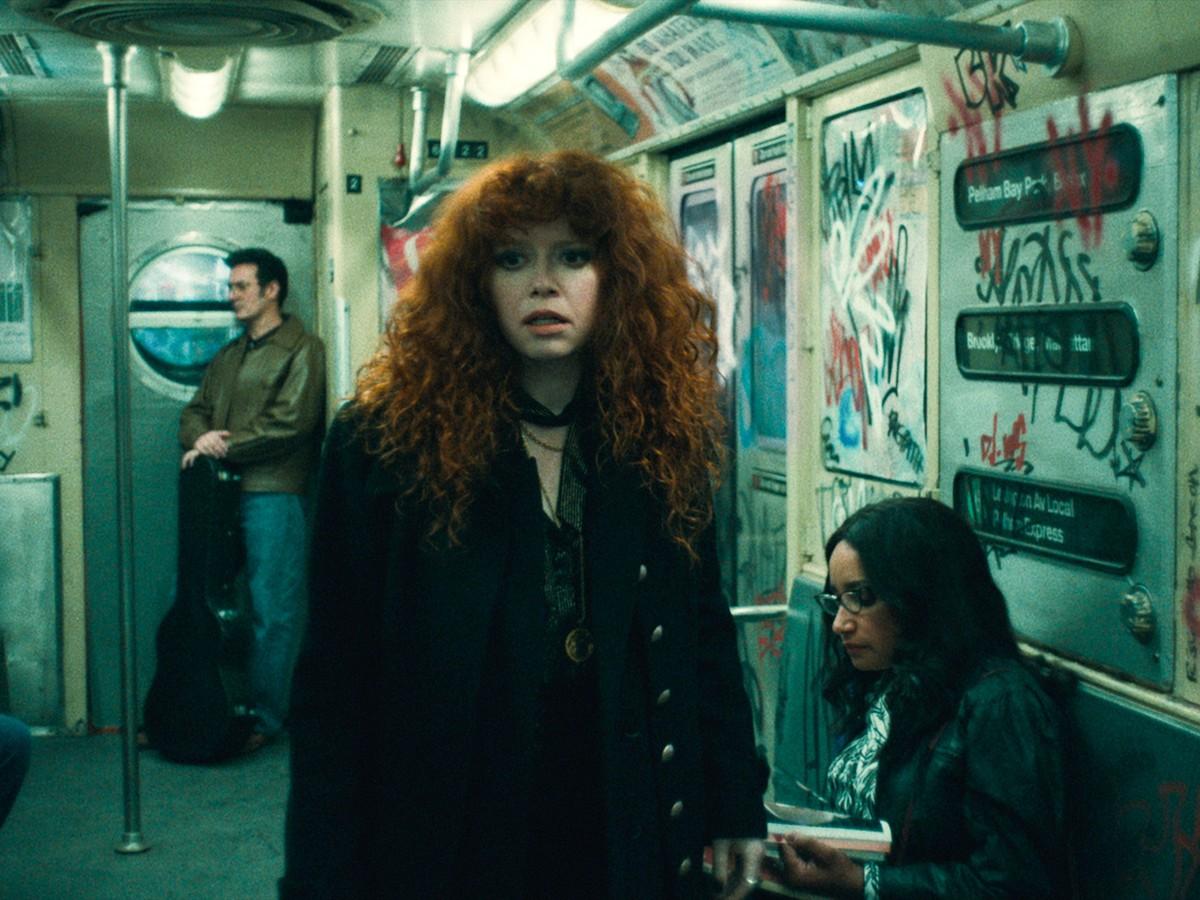
It Uses the Loop as a Metaphor for Trauma and Grief
Nadia’s repeated deaths aren’t about karma or sci-fi mechanics. They’re about emotional paralysis. She’s stuck on her 36th birthday—the same age her mentally ill mother died—and she can’t move forward because she’s never truly processed the legacy of that loss.
The show uses the loop as a metaphor for:
- Avoidance: Nadia keeps dying because she refuses to deal with what’s underneath.
- Patterns: She repeats the same behaviours, habits, and deflections—until she breaks them.
- Healing: The only way out is through emotional honesty and connection.
The loop becomes psychological, not just temporal.

It Adds a Second Looper—and Rejects Romance
Midway through Season 1, we meet Alan, another person trapped in a loop. But rather than becoming Nadia’s love interest, he becomes her emotional counterpart. They are opposites—she’s chaotic, he’s rigid—but they need each other to grow.
Together, they:
- Realize their loops are linked.
- Learn to shift focus from fixing themselves to helping each other.
- Unlock the emotional core of the series: that real change happens through vulnerability and connection.
It’s not a rom-com. It’s a friendship forged in death.

It Breaks Its Own Rules in Season 2
Just when viewers thought they understood the loop logic, ‘Russian Doll’ Season 2 takes a bold risk: it abandons the loop entirely and moves into time travel and body-swapping.
This isn’t a gimmick. It’s a progression.
- In Season 1, Nadia keeps dying because she’s stuck in the trauma of her own life.
- In Season 2, she’s pulled into her family’s past, reliving her mother’s and grandmother’s lives.
- The show uses time travel as a vehicle for intergenerational healing—showing that some loops aren’t just personal, they’re inherited.
Instead of asking “how do I fix this day?” it asks “how do I fix the damage that was passed down to me?”

It Doesn’t Care About Explaining the Sci-Fi
‘Russian Doll’ never bothers with the “how.” No scientists, no labs, no exposition-heavy monologues. You never find out why the loops happen or how the time-travel works.
And that’s the point.
The show isn't about time. It's about consciousness. The sci-fi is a tool, not a centerpiece. What matters is the emotional logic, not the rules. That creative freedom allows the show to go deeper than most of its genre peers.
Final Thought: The Loop, Rewired
‘Russian Doll’ takes the familiar mechanics of the time loop and reinvents them as tools for existential excavation. It’s not about fixing the day—it’s about fixing yourself. Or rather, understanding yourself enough to stop needing the loop in the first place.
In doing so, the show turns what’s often a comedic or action-based genre into something richer: a meditation on death, memory, mental illness, and the beautiful mess of being human.
It’s not just a reset. It’s a rebirth.
---Silviya.Y