

Since his first appearance in ‘Pirates of the Caribbean: The Curse of the Black Pearl’ (2003), Captain Jack Sparrow, portrayed by Johnny Depp, has become one of cinema’s most iconic and unconventional heroes. Initially introduced as a charming rogue and comedic trickster, Jack’s character has undergone a significant evolution throughout the franchise, transforming into a figure that borders on tragic, haunted by loss, betrayal, and the relentless pursuit of freedom.
In the early films, Jack is presented as a flamboyant, unpredictable pirate with questionable morals but an undeniable knack for survival. He is a master manipulator, often orchestrating chaos that ultimately serves his goals. His wit, eccentricity, and unorthodox tactics paint him more as a chaotic neutral character than a traditional hero. Jack's motivations seem self-serving: recovering the Black Pearl, avoiding execution, and acquiring treasure. Yet, even in these moments, he exhibits fleeting glimpses of conscience and loyalty—traits that deepen with each film.
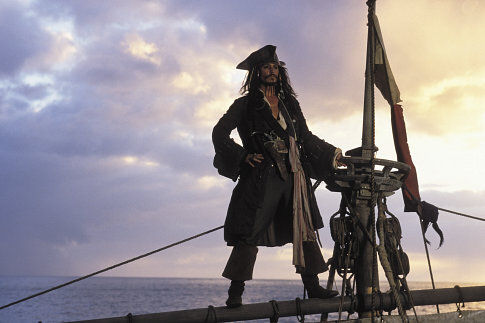
Image Courtesy: IMDb
As the series progresses, so does the complexity of Jack's character. In ‘Dead Man’s Chest’ (2006) and ‘At World's End’ (2007), Jack confronts mortality, betrayal, and the cost of his freedom. The light-hearted conman begins to reveal vulnerability, particularly in his dealings with Davy Jones and the East India Trading Company. These antagonists represent not just external threats but internal demons—his past misdeeds, broken alliances, and the price of his independence. Jack's compass, which points to what he most desires, increasingly becomes symbolic of his inner conflict rather than a mere plot device.
By ‘On Stranger Tides’ (2011) and ‘Dead Men Tell No Tales’ (2017), Jack’s legend begins to wane. He is portrayed as a relic of a fading age—forgotten, ridiculed, and increasingly irrelevant in a changing world. His swagger is tinged with desperation, and his cunning replaced with melancholy. The once-feared pirate now drifts, both literally and metaphorically, through a world that no longer fits him.
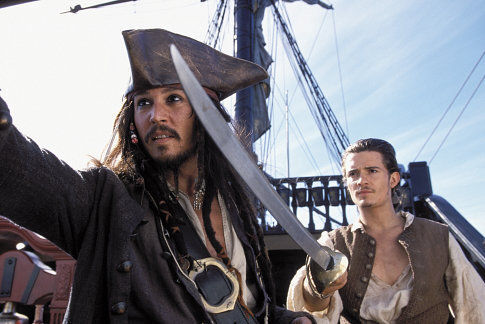
Image Courtesy: IMDb
Jack Sparrow’s transformation from trickster to tragic hero mirrors the broader themes of the series—freedom versus control, myth versus reality, and the erosion of the old ways. Though still clad in rum-soaked humour and unpredictability, Jack ultimately embodies a deeper narrative: that of a man chasing an ideal he can never truly grasp, making him a truly tragic figure beneath the gold-toothed grin.
–Farheen Ali