
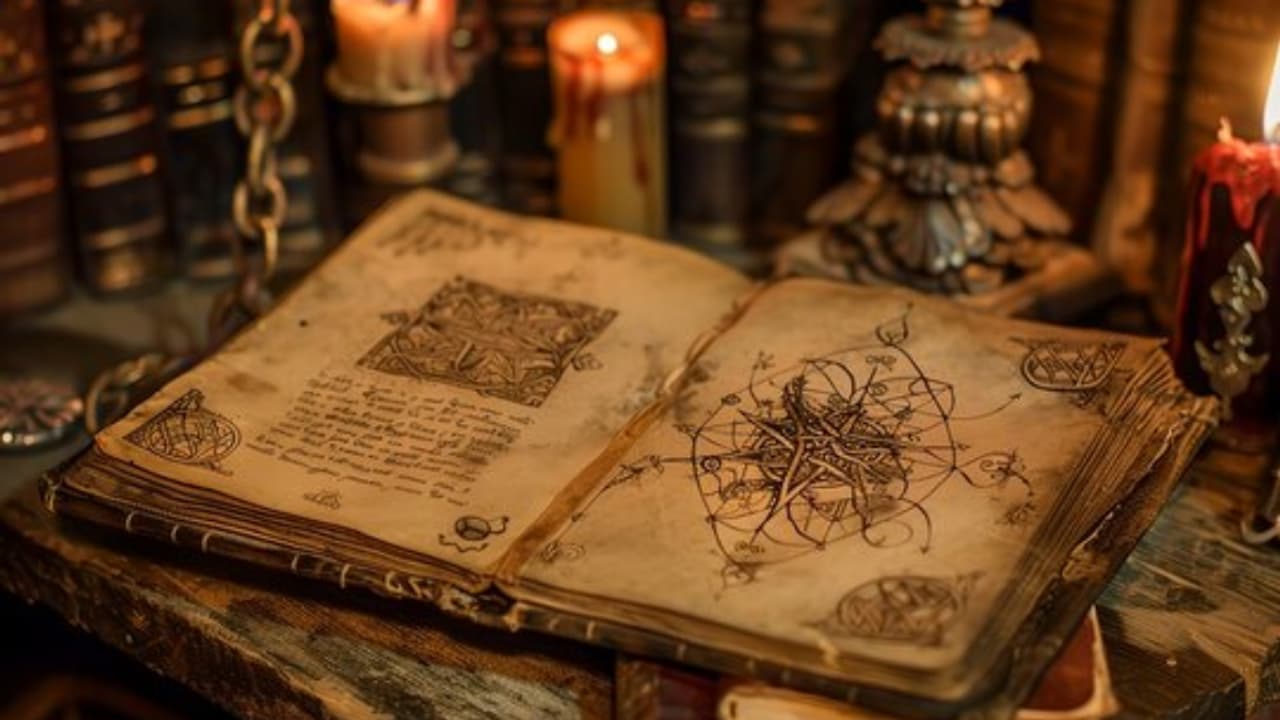
Grimoires—mysterious and often forbidden books of magic—have been a staple of fantasy literature for centuries. These magical texts, often shrouded in secrecy and danger, have evolved from their early representations in ancient texts to the fantastical and modern interpretations seen in books, movies, and television shows today. From arcane tomes wielding immense power to magical guides used by protagonists to combat evil, grimoires have undergone a fascinating transformation in fantasy fiction. Let’s explore how grimoires have evolved from their ancient roots to their current forms in modern mysticism, highlighting key changes in their portrayal and significance.
Ancient Roots: The First Grimoires
The idea of a grimoire dates back to ancient texts and cultures, where books of magic were often considered sacred, dangerous, or forbidden. One of the earliest known grimoires is the Book of the Dead from ancient Egypt, a collection of spells designed to guide the deceased through the afterlife. These texts were not magical in the sense we think of today, but rather they were spiritual documents with divine power.
In ancient Greece and Rome, grimoires began to take a more recognizable form. The Greek Magical Papyri, a collection of spells, rituals, and incantations from the first few centuries AD, is often regarded as one of the foundational texts in the history of Western magic. These papyri were used to invoke deities, spirits, and powers, and their influence would persist through medieval and Renaissance magical traditions. The Key of Solomon, one of the most famous medieval grimoires, emerged during the Middle Ages, linking these ancient magical traditions with the idea of invoking supernatural forces through written rituals and spells.
The Medieval and Renaissance Grimoires: Dark Arts and Forbidden Knowledge
During the medieval and Renaissance periods, grimoires became more formalized as objects of occult knowledge. These texts were often associated with the dark arts, alchemy, necromancy, and the summoning of spirits. Works like the Lesser Key of Solomon, The Picatrix, and The Book of Abramelin became highly influential, providing detailed instructions on invoking demons, summoning angels, and performing alchemical processes.
In fantasy literature, this era’s grimoires took on the role of powerful and dangerous texts that were coveted by both heroes and villains. The Grimorium Verum, a 16th-century French grimoire that detailed demonic conjuring, would inspire the portrayal of grimoires as forbidden books containing knowledge too dangerous for mortal minds. These grimoires were often seen as cursed or corrupting, capable of turning the reader into a puppet of dark forces or leading them down a path of destruction.
The Rise of Grimoires in Romanticism and Gothic Literature
By the 18th and 19th centuries, the grimoire became a recurring theme in Romantic and Gothic literature. Writers like Mary Shelley, Edgar Allan Poe, and Bram Stoker began to incorporate grimoires into their works, associating them with ancient secrets and the quest for forbidden knowledge. In Frankenstein, for instance, Victor Frankenstein seeks to unlock the secret of life, drawing upon obscure, ancient knowledge akin to a grimoire.
The depiction of grimoires in these works reflects the growing fascination with the occult and supernatural forces during the Romantic period. These texts were no longer just magical tools but symbols of mankind's dangerous ambition and hubris. In Gothic literature, the grimoire often functioned as a metaphor for the desire to control the uncontrollable, as characters would attempt to manipulate life, death, or fate through these books—often at great personal cost.
Grimoires in Modern Fantasy: Tools for Heroic Quests
With the rise of modern fantasy literature, particularly in the 20th and 21st centuries, grimoires took on a more nuanced role. While still retaining their association with magic, they became central to the heroes' quests, providing guidance, power, and sometimes the key to defeating evil.
In J.R.R. Tolkien’s The Lord of the Rings, for example, the Red Book of Westmarch is a central part of the story, though it isn’t strictly a magical grimoire. This book, compiled by Bilbo and Frodo Baggins, records the events of their adventures and functions as a historical artifact, a link between the fantastical world of Middle-earth and the world of men. In contrast, texts like the Book of Shadows in Charmed or the Harry Potter series' various magical books, such as The Monster Book of Monsters, evolved into tools of empowerment and knowledge. These grimoires were not just about summoning dark forces but about guiding the protagonist toward a greater purpose, often teaching the heroes how to control their magic, face adversity, and protect others.
In Harry Potter, for example, the magical textbooks, like The Standard Book of Spells, provided students with the basics of magic. While not quite grimoires in the traditional sense, these books still evoke the magical, educational aspect of grimoires in their ability to teach and empower the students at Hogwarts.
The Grimoire in Modern Mysticism and Pop Culture
In the 21st century, grimoires have become increasingly entwined with modern mysticism and pop culture. The depiction of grimoires has shifted from dangerous, forbidden texts to objects of mystery, power, and exploration. These books may still have dark elements, but they are often more intertwined with the protagonist’s journey of self-discovery or the broader battle between good and evil.
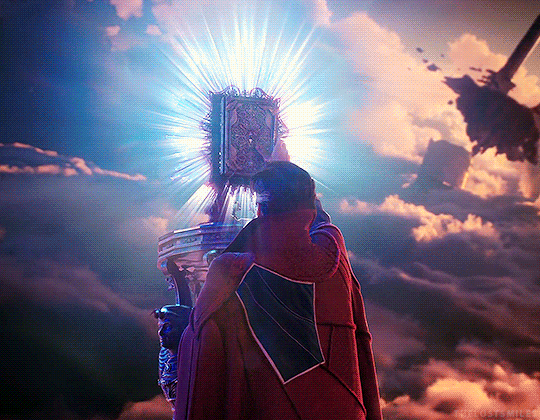
In films like Doctor Strange, grimoires serve as both sources of magical power and symbols of mystical wisdom. The Book of Vishanti, for example, is depicted as a sacred text that grants knowledge to the Sorcerer Supreme. Similarly, in the Dark Souls video games, grimoires and magical texts are integral to the player’s understanding of the world and the spells they wield.
In addition, the rise of urban fantasy has led to grimoires appearing in settings that blend the mystical with the everyday. In The Dresden Files by Jim Butcher, for instance, the protagonist Harry Dresden is a wizard detective who uses various grimoires to fight supernatural threats in a modern-day Chicago. The grimoires in this series are integral to the plot and are portrayed as powerful, living books that continue the tradition of magical texts but within a more accessible, modern framework.
The Influence of Grimoires in Modern Horror
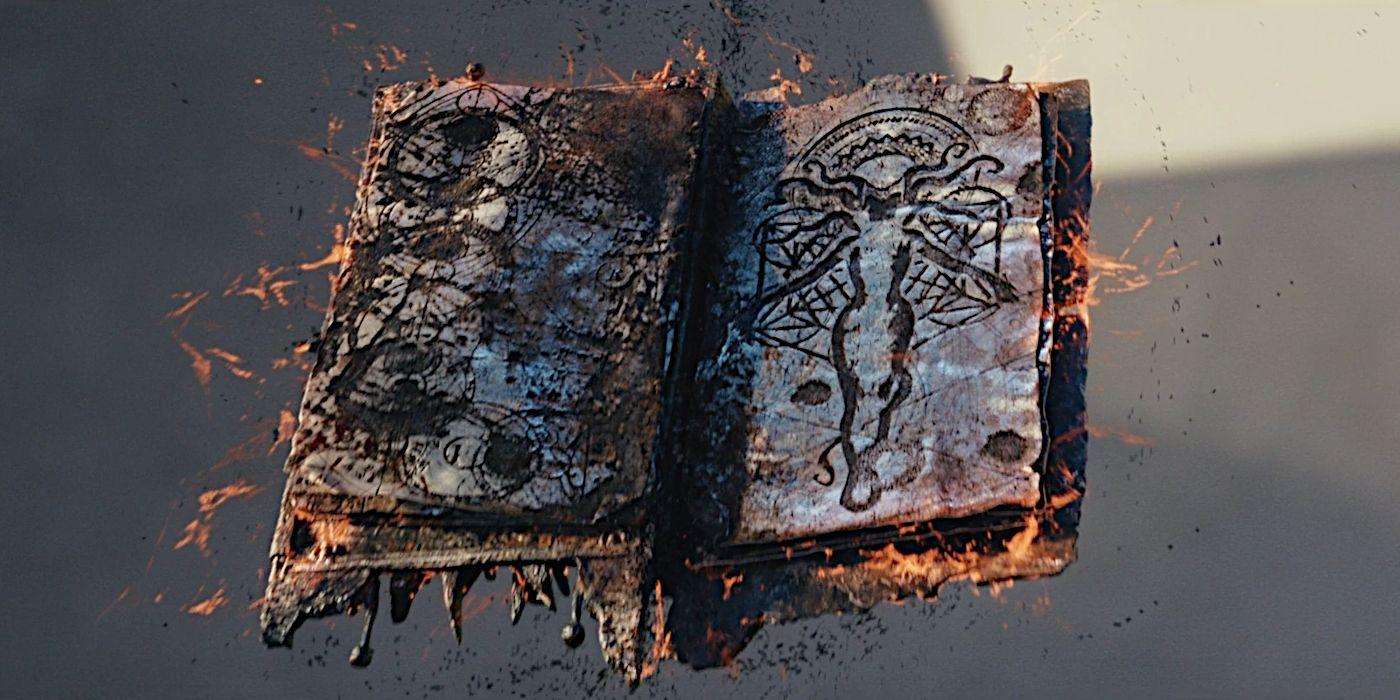
Grimoires have also found a significant place in modern horror fiction, where they are often symbols of power, corruption, and doom. Films like The Evil Dead, with the Necronomicon, and The Conjuring, featuring the Darkhold, reflect the ongoing association of grimoires with ancient and malevolent forces. These texts often represent the boundary between the known and the unknown, and their use frequently results in chaos, madness, or death, emphasizing the perilous nature of seeking knowledge that was never meant to be discovered.
A Continuum of Mystery and Power
Grimoires have come a long way from their ancient origins. They have evolved from sacred texts of the dead to powerful, forbidden books of occult knowledge, and, more recently, to tools of magic and self-discovery in modern fantasy and horror fiction. Today, they serve as symbols of both the potential and peril of magic, embodying the human thirst for knowledge and the desire to harness the unknown.
From the grimoires of medieval alchemists to the enchanted books of contemporary fiction, these magical tomes continue to captivate readers, serving as powerful metaphors for our own quests for understanding, power, and mastery over the world around us. Whether used for good or evil, grimoires in fantasy literature remind us that the pursuit of knowledge is always a double-edged sword.
---Silviya.Y