

Christopher Nolan is no stranger to cinematic scale, but for his upcoming film, 'The Odyssey,' he seems to have surpassed even his own grandest ambitions. Nolan recently opened up in an interview with Empire magazine that more than "two million feet of film" were utilized in his most recent production, with a large portion of the footage shot on real open water. Describing the process as "pretty primal," Nolan added that he has spent four months at sea with his cast, filming amid shifting waves and unpredictable conditions.
Nolan thinks that in order to tell Homer's epic voyage in a way that seems genuinely lived-in and emotionally anchored, it is essential to shoot in such an unvarnished, physical setting. With the film now in post-production, Nolan's creative gamble looks set to deliver one of the most immersive mythological movies in modern cinema.
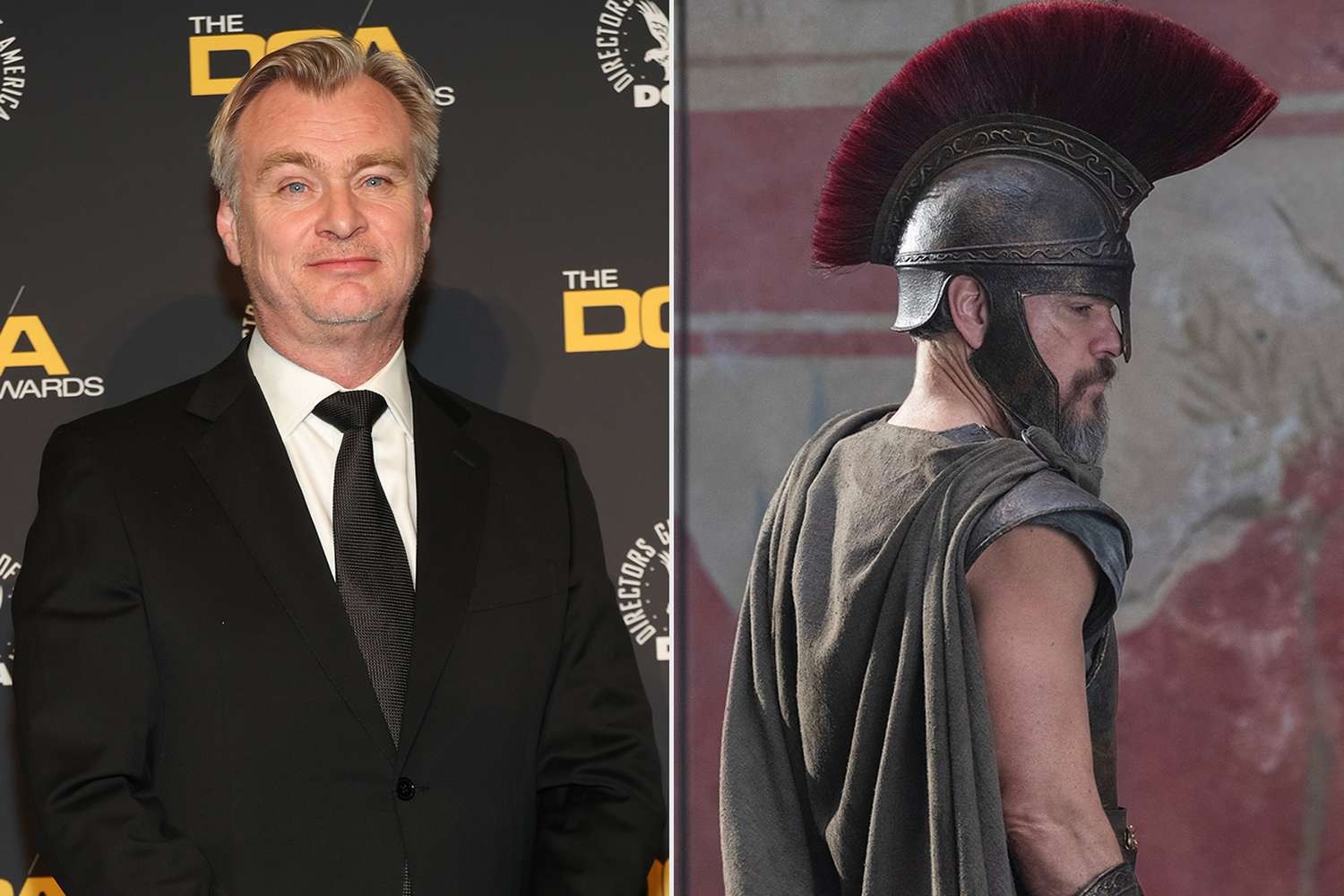
Image Courtesy: People
Nolan's Vision: Elevating Myth Through Immersive Filmmaking
Nolan's ambition for 'The Odyssey' reflects his long-standing desire to push the boundaries of cinematic storytelling. Nolan, who is well-known for his blockbuster hits such as 'Inception,' 'Interstellar,' and 'Oppenheimer,' claims that he was drawn to Homer's epic because he saw a "gap in cinematic culture"—the lack of mythological films made with the scale and emotional weight of a big-budget IMAX production.

Image Courtesy: Vulture
To fulfill that vision, he challenged IMAX to build lighter, quieter 70 mm cameras that could sustain extended shooting—and for the first time, he shot entirely on IMAX film. Months of ocean studies, marine logistics, and seeking out isolated water spots that would provide the unadulterated and untamed look he had in mind were all part of his rigorous preparation.
Nolan underlined in the interview that filming in the natural world provides levels of authenticity that no studio could imitate, and that the cast and crew had to give their all to the usage of real landscapes rather than CGI-dominated universes.
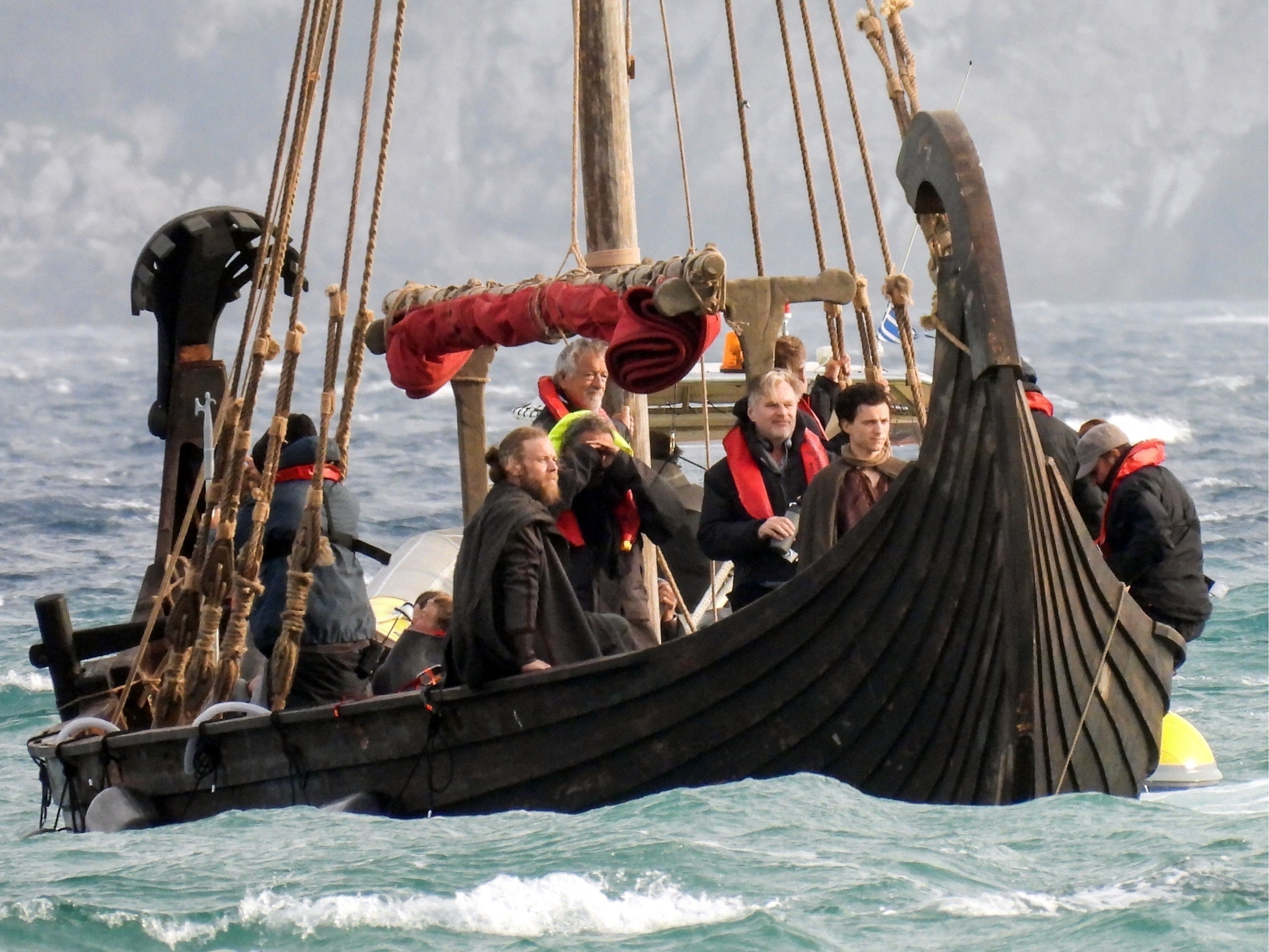
Image Courtesy: Deuxmoi
Filming at Sea: The Toll on Actors and Crew
Everyone was put to the test during the open-water shoot. During their lengthy days on the water, the cast—which included Matt Damon as Odysseus, Tom Holland as Telemachus, and Anne Hathaway as Penelope—often had to deal with actual waves, seasickness, and weather so erratic that production schedules had to be changed on the spot.
Nolan revealed that the sea "fought back," shaping not only the film's visual language but also the performances themselves, as the actors were forced to react to genuine danger and physical exhaustion. Crew members had to secure equipment against violent tides, and the IMAX cameras—despite modifications—still demanded immense effort to operate.
The ocean eventually became "another leading character" in the tale, according to Nolan, who maintains that these struggles were necessary to give the movie a sense of life.
Cast, Story Scope, and Release Details
The film's formidable cast also includes Zendaya, Lupita Nyong'o, Robert Pattinson, Charlize Theron, Jon Bernthal, and Elliot Page in addition to Damon, Holland, and Hathaway. The film, which combines dramatic family scenes, close-knit interpersonal moments, and expansive sea scenes, follows Odysseus's treacherous journey home following the Trojan War.
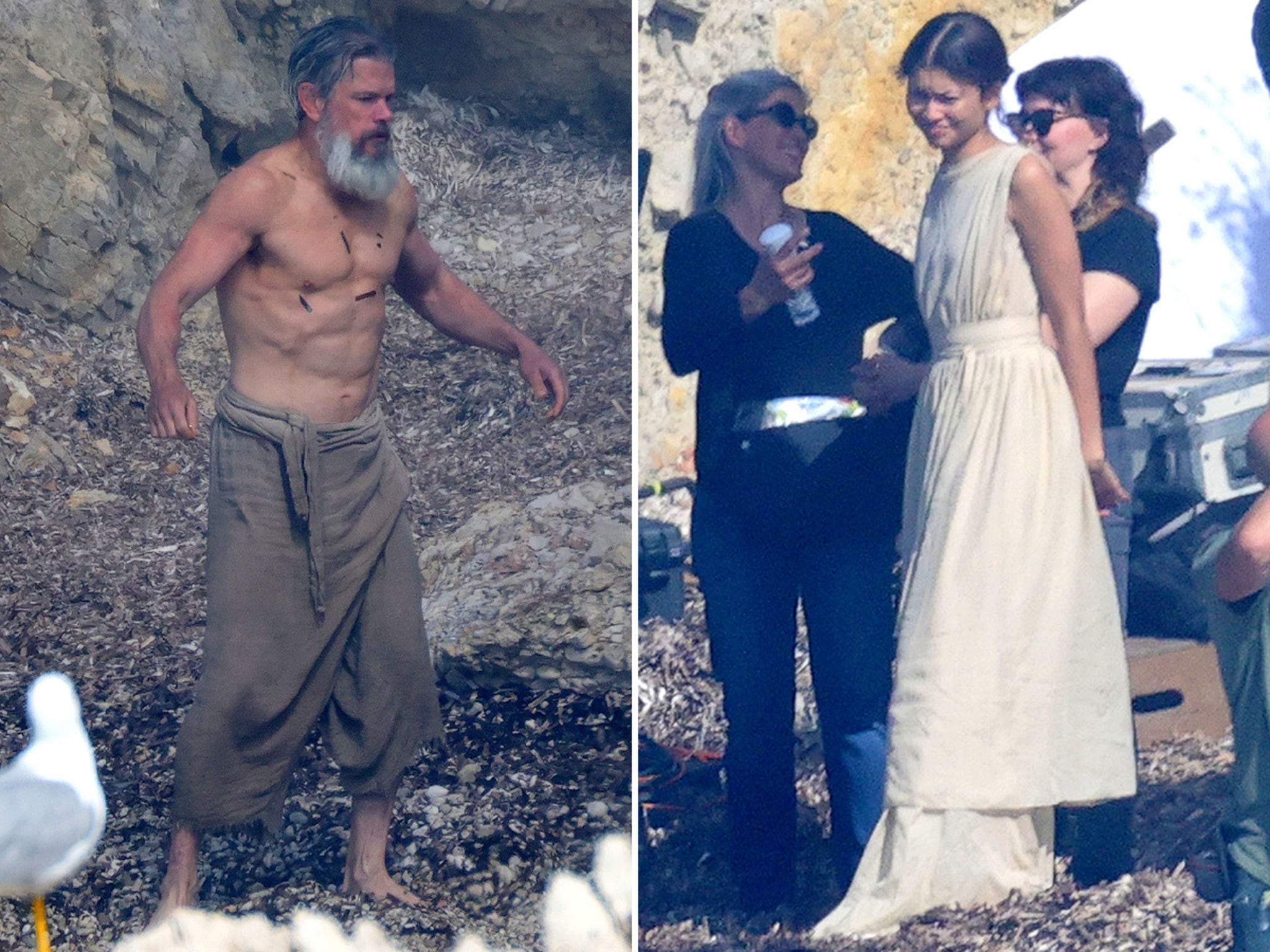
Image Courtesy: TMZ
Production stretched across 91 days, including nearly four months at sea, making it one of Nolan's most logistically complex films. With post-production now underway, the director is finishing the sound design, practical effects integration, and IMAX mastering to ensure that the epic arrives in its fullest form when it hits theaters on 17th July, 2026.
Nolan's Legacy and the Future of Epic Filmmaking
With 'The Odyssey,' Nolan carries on his long-standing practice of reimagining popular movies using immersive world-building, large-format film, and practical effects. 'The Odyssey' seeks to bring back mythological storytelling with previously unheard-of realism and scope, much as 'Dunkirk' revolutionized war movies and 'Interstellar' enhanced science-fiction drama. By committing to real locations, real water, and physical performance demands, Nolan builds on a career marked by innovation and a refusal to compromise artistic vision.

Image Courtesy: IMDb
As one of the few contemporary filmmakers still attempting to produce authentic cinematic spectacles, his willingness to take risks—creative, financial, and logistical—solidifies his reputation as an amazing filmmaker with great artistic ambitions.