
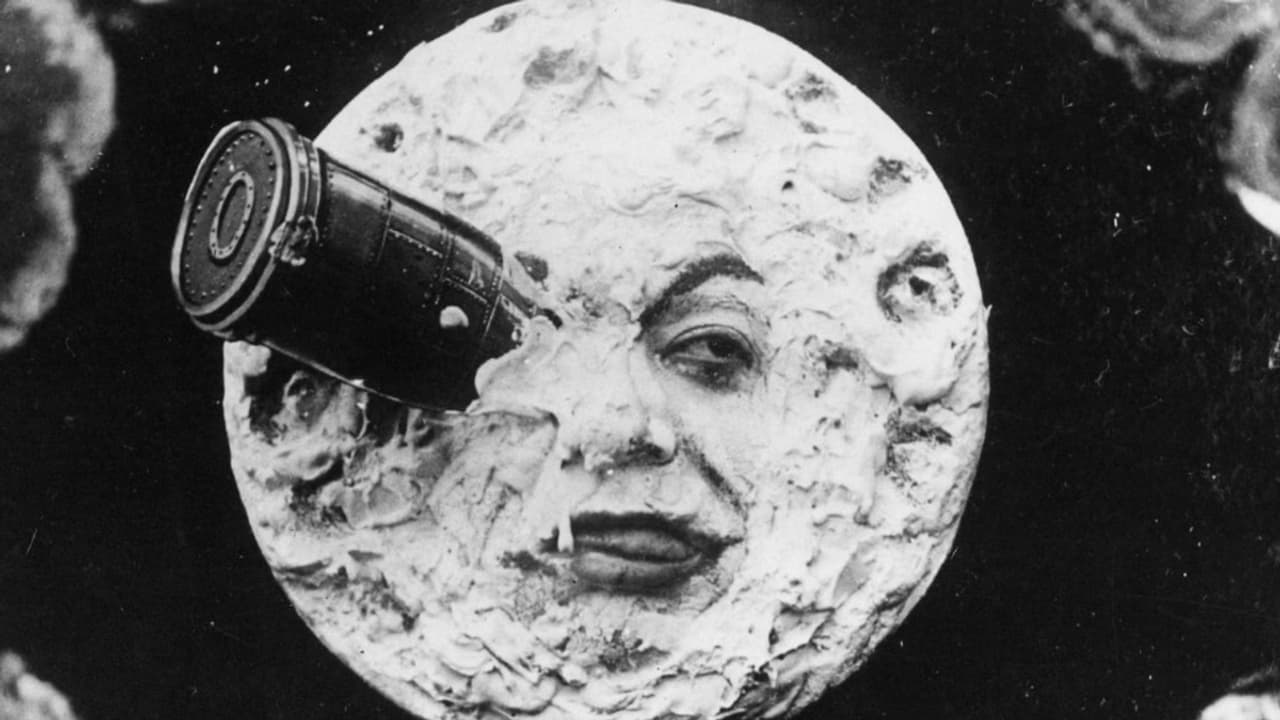
In the realm of early science fiction cinema, few films are as influential as Georges Méliès’ 1902 masterpiece, ‘A Trip to the Moon’ (Le Voyage dans la Lune). This silent film, inspired by the works of Jules Verne and H.G. Wells, presents a whimsical vision of space travel that feels both antiquated and ahead of its time. Over a century later, the film remains a striking example of retro-futurism, embodying many elements of steampunk aesthetics before the term even existed.
The Essence of Retro-Futurism
Retro-futurism is the artistic blend of historical styles with futuristic technology. It often imagines an alternate past where technology advanced in ways that align with Victorian or early 20th-century design principles. Steampunk, a subgenre of retro-futurism, is particularly tied to the aesthetic of gears, brass, steam-powered machines, and elaborate, anachronistic inventions—elements that are found throughout ‘A Trip to the Moon’.
‘A Trip to the Moon,’ as a Steampunk Masterpiece
Though created long before steampunk emerged as a distinct genre, ‘A Trip to the Moon’ displays many of its hallmark characteristics:
Victorian-Era Aesthetic
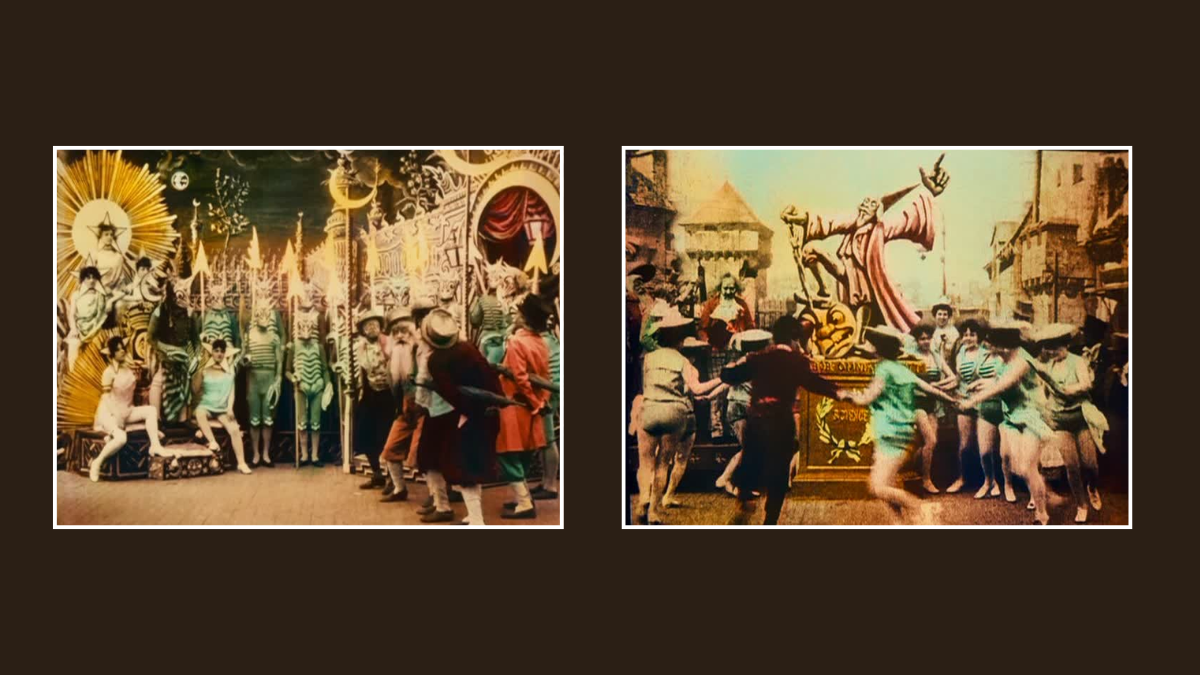
The world of ‘A Trip to the Moon’ reflects the turn-of-the-century scientific imagination. The astronomers, dressed in elaborate robes and hats, resemble 19th-century scholars rather than modern scientists. Their observatory, filled with massive books and celestial charts, mirrors the ornate scientific societies of the past.
Industrial and Mechanical Ingenuity
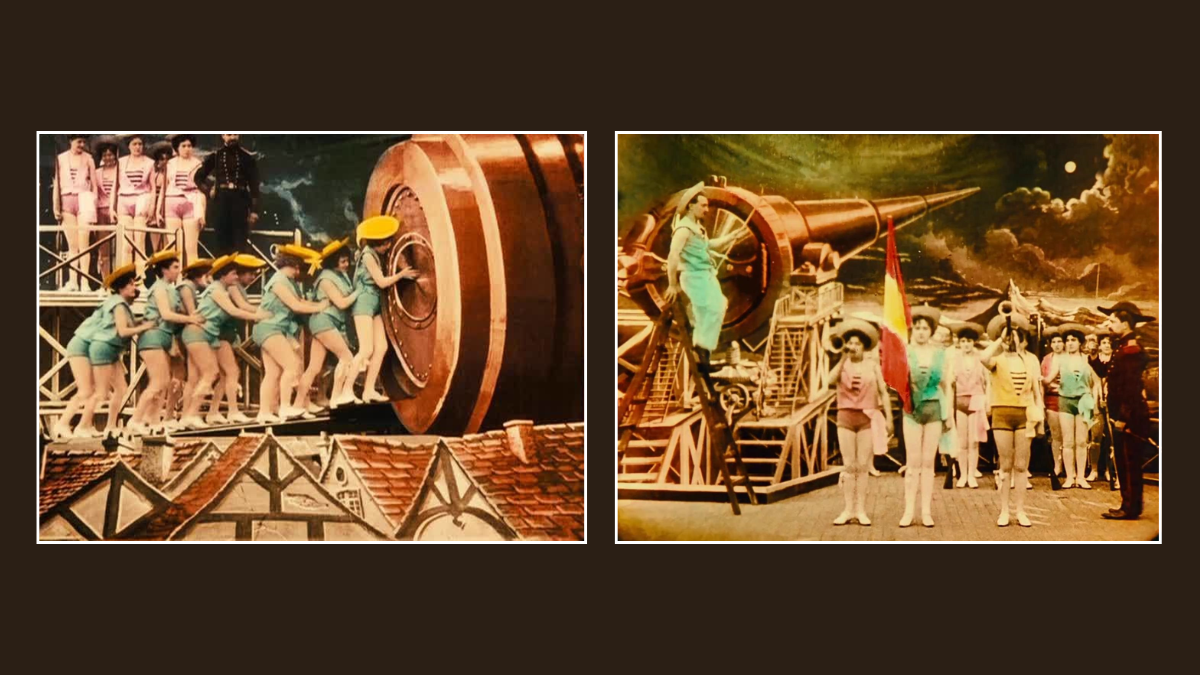
One of the most iconic elements of the film is the cannon-propelled space capsule. Instead of a sleek, modern rocket, the spacecraft is essentially a large bullet fired from an enormous artillery piece—reminiscent of the grandiose yet impractical machines imagined by Jules Verne in ‘From the Earth to the Moon’.
Handcrafted Special Effects
Méliès’ pioneering use of practical effects, hand-painted sets, and mechanical props gives the film a tactile, handcrafted quality. The film’s gears, levers, and mechanical contraptions evoke the steampunk aesthetic, where engineering and craftsmanship reign supreme over digital innovation.
Fantasy Meets Science
Much like steampunk fiction, ‘A Trip to the Moon’melds scientific curiosity with whimsical fantasy. The film’s depiction of space travel is unburdened by realism—there’s no concern for gravity, oxygen, or the actual distance to the Moon. Instead, it presents a dreamlike journey, complete with anthropomorphic stars and moon creatures, capturing the same spirit of imaginative world-building seen in modern steampunk tales.
The Legacy of ‘,A Trip to the Moon’, in Steampunk and Beyond
Méliès’ vision has had a profound influence on cinema, art, and literature, inspiring both retro-futuristic and steampunk movements. The film’s imagery—especially the Moon’s face struck by a rocket—has become one of the most iconic visuals in film history. Today, steampunk artists and filmmakers continue to draw inspiration from Méliès’ handcrafted, theatrical aesthetic, blending the old with the fantastical in ways that pay homage to his pioneering vision.
While ‘A Trip to the Moon’ predates the steampunk movement by decades, its Victorian sensibilities, mechanical innovations, and imaginative vision align perfectly with the genre’s aesthetic. By combining scientific wonder with theatrical spectacle, Méliès inadvertently created one of the earliest examples of retro-futuristic storytelling, proving that the dreams of the past can still inspire the futures we imagine today.
Also Read: The Troubadour Connection: How Laurel Canyon Artists Made It Big
--Silviya.Y