

Animation is rapidly evolving; it is no longer only associated with children's cartoons; instead, it is now recognized as a serious storytelling medium. Recently, PVR INOX's marketing and innovation strategist, Aamer Bijli, discussed how Indian viewers are welcoming this change. According to Bijli, it is evident that animation has advanced to a more inclusive, cross-age genre as multiplexes now support anime releases like the upcoming 'Crayon Shin-chan: The Spicy Kasukabe Dancers.'
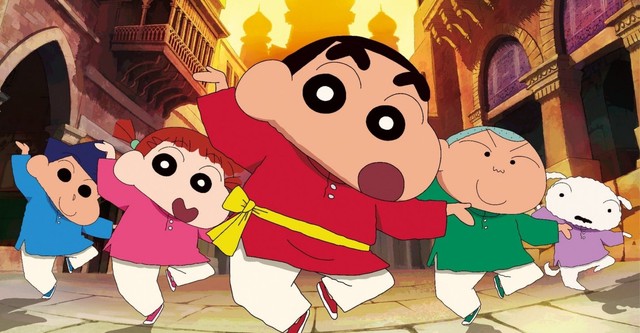
Image Courtesy: JustWatch
Animation's Rise Beyond Kid's Cartoons
Bijli believes there has been a noticeable but slow shift in the audience's thinking. He cites the popularity of titles like 'Haikyu!!,' 'Your Name,' and 'Suzume.' 'The Dumpster Battle' also serves as proof that people now take animated movies just as seriously as they do live-action movies.
He claims that viewers' desire for varied, international content increased, particularly after the epidemic, and that animation stood out as a medium that could satiate that desire. He notes that many fan clubs already existed for anime in India and became vocal about their desire to see such films theatrically released in the country.

Image Courtesy: The Hollywood Reporter
Bijli goes on to say that while there is risk involved in distributing animated films, PVR INOX has taken the initiative by talking with foreign distributors and attentively examining what fan communities want. The forthcoming release of 'Crayon Shin-chan: The Spicy Kasukabe Dancers' is particularly daring because it will be the first Shin-chan movie to be set in India and will be shown on 350–500 screens in different languages.
With a projected box office receipt of 1.5 to 2 times the previous film's Rs 5 crore, Bijli anticipates exceeding its previous performance.
The 'Demon Slayer' Effect
If Bijli's statements required evidence, 'Demon Slayer: Infinity Castle' has it. The movie broke advance booking records when it came out on 12th September. According to sources, it sold over ₹9–10 crore in presales at 750 screens, including the unusual midnight and 5 a.m. showings. It made over ₹12.6 crore net on its first day of business and surged past ₹50 crore in its first six days.

Image Courtesy: Pinkvilla
By day 13, its momentum had brought it very near to ₹65 crore. Notably, the original Japanese version with English subtitles accounted for over half of its collections; Hindi and English-dubbed versions also made a substantial contribution.
Animes like 'Demon Slayer: Infinity Castle' set the standard for what animated cinema in India can achieve with this kind of performance. Bijli's view that animation has merited a position in popular opinion looks less like a personal viewpoint and more like an ongoing reality.
A Strategy Shift and Long Term Vision
According to Bijli, recognizing that animated movies are more than "simply cartoons" is a component of a larger change in PVR's content evaluation methodology. He emphasizes that in order to maintain momentum in the animation industry, a robust content pipeline is essential.
He believes there is little reason to restrict animation to children's content in India, where audiences are already watching foreign-language and independent films. He also notes that India is catching up and that animation is now frequently viewed as a family genre rather than something that is only watched by kids.
To conclude, Bijli has a very clear idea: animated movies should be evaluated on the basis of narrative, artistic merit, and emotional impact rather than age. The definition of what constitutes an "animated film" is growing as PVR supports these releases and continues to builds audiences. In his view, the future lies in storytelling that draws in all kinds of viewers—and animation, once dismissed as "kids' content," is increasingly proving it belongs in that mix.